Last updated 2026-08-18
TL;DR
Connecticut has no standalone license for espresso equipment techs. But connecting a machine to a water line needs a plumbing license (P-2 minimum), and hardwiring needs an electrical license. Plan on $2,900 to $5,000 to start: a pro tool kit (~$1,500), SCA training (~$795), general liability insurance (~$504/year), and LLC filing ($120). Stick to swap-out repairs and skip plumbing, and you can launch in 1 to 3 months.
Do You Need a License to Be an Espresso Equipment Tech in Connecticut?
No. Connecticut has no standalone license for espresso equipment technicians. You can diagnose, repair, and maintain machines without any state credential.
There is a sharp line, though. Group gasket swaps, descaling, thermostat replacement, pump rebuilds, all of that sits outside state licensing. The moment you touch a water line or hardwire a machine, you cross into regulated work. The Connecticut Department of Consumer Protection is blunt about it: any person engaged in the business of plumbing or piping work must be licensed. Connecting an espresso machine to the building water supply is plumbing work. There is no gray area.
Electrical work runs on the same rule. Open a junction box or run a new circuit, and you need an electrical license. [2] Most independent techs never touch either job. They keep a plumber and an electrician in their phone and stay inside what they can legally do.
One practical move: describe your services as “coffee equipment maintenance and repair,” never “plumbing,” and never advertise water-line hookups. That keeps you on the right side of the statute.
Towns sometimes add their own registration rules, but the state's own business portal says “Most businesses do not need a state-level business license.” [8] You can operate as a sole proprietor or an LLC right away. The one real restriction is plumbing. If you plan to run water lines yourself, you need a P-2 journeyperson plumbing license or higher, which means an apprenticeship and an exam (see the timeline section). For the tech who never touches pipes, no license is required.
What Is the Total Startup Cost for an Espresso Tech in Connecticut?
A realistic startup budget runs $2,900 to $5,000. Where you land depends on how you source tools and whether you pay for training on day one. That range leaves out a vehicle, which you probably already own. It covers the essentials: a pro-grade tool kit, a recognized training course, first-year liability insurance, and the paperwork that makes the business real.
The chart breaks down typical first-year costs using hard numbers from suppliers, the state, and insurance carriers. Tools and training are the heavy hitters. Insurance is the cost you carry every year; the LLC fee is one-time. Buy a cheaper kit and skip formal training and you can spend less, but anyone doing commercial work wants the reliability a proper kit brings.
Here is the line-item view:
- Professional tool kit: $1,500 (Espresso Parts technician kit) [6]
- SCA Coffee Technician Foundation course: $795 (non-member price) [5]
- General liability insurance, median annual: $504 ($42/month) [4]
- Connecticut LLC filing fee: $120 [3]
- Trade name registration: $10 [9]
Total first-year outlay: $2,929. Many techs add $200 to $500 for a domain, a simple website, and business cards. Optional, but smart.
These are averages. A bare-bones build with used tools and no course can land near $1,200, but you give up the precision and the credentials commercial customers notice.
What Tools Do You Actually Need to Start?
Show up to a cafe with a screwdriver from the junk drawer and nobody takes you seriously. Espresso equipment runs at high pressure and temperature, and the tolerance for sloppy work is zero. A dedicated technician kit is your single largest upfront cost.
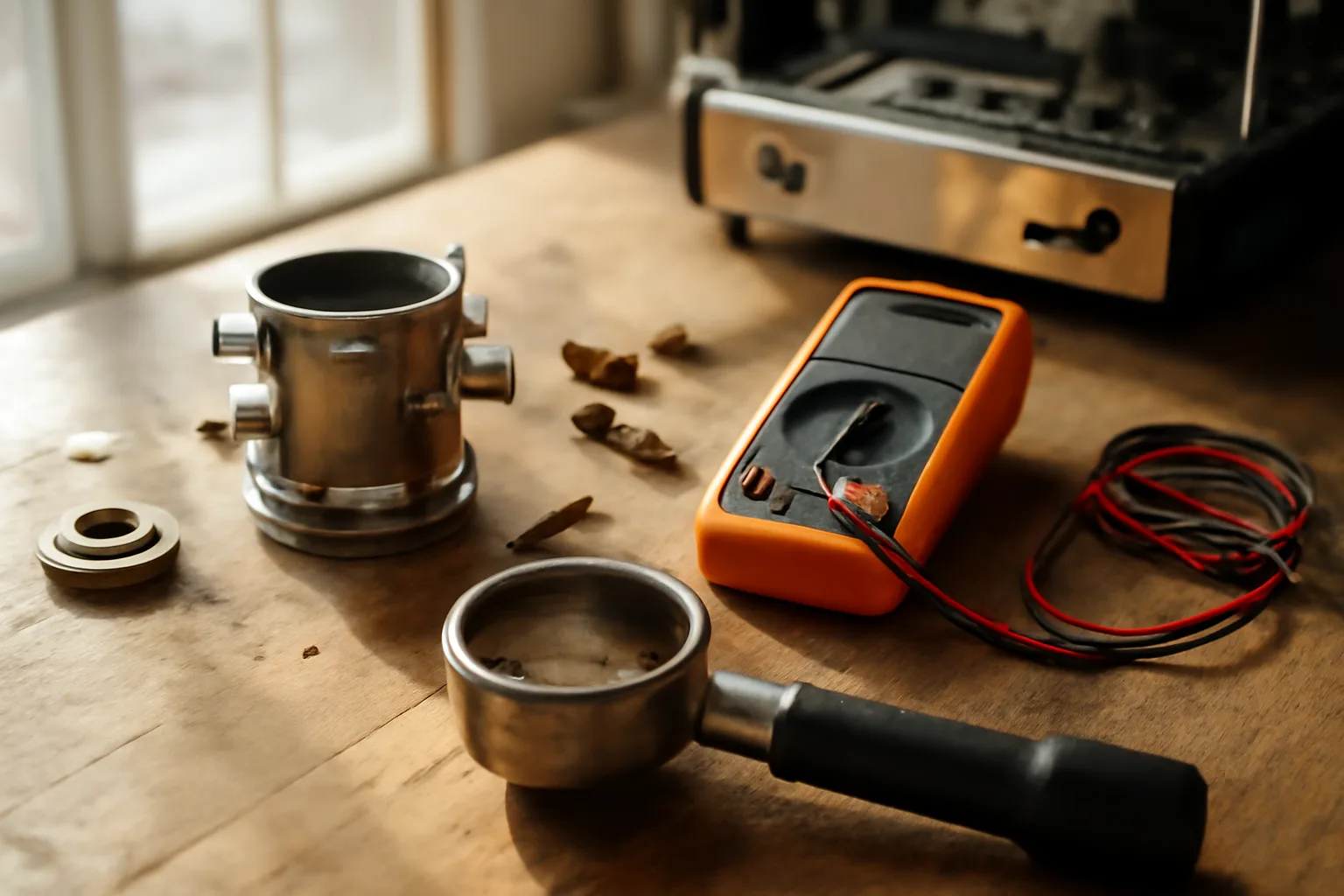
Espresso Parts sells a commercial espresso machine technician tool kit for $1,499.95. [6] It bundles a digital multimeter with a temperature probe, a portafilter pressure gauge, a torque wrench, grouphead brushes, blind baskets, a refractometer adapter, and more. Overkill for a beginner? Not really. It handles about 90% of routine jobs without you chasing missing bits mid-repair.
If $1,500 feels steep, you can assemble your own for $700 to $900. The non-negotiables: a multimeter that reads temperature ($80 to $150), a portafilter pressure gauge ($60 to $120), a set of metric wrenches, torque screwdrivers, a backflush disc, and a couple of group brushes. What you give up is the case organization and a few specialty adapters that make awkward machine frames less of a fight. Most techs who go this route buy the prebuilt kit within a year anyway. The productivity gain is that real.
Vehicle tools like a wet/dry vac for spills and a dolly aren't in that number, but add maybe $200. Plan for $1,000 to $1,800 in tools. That's the honest range.
How Much Does Insurance Cost for Connecticut Espresso Service Techs?
General liability insurance is what separates a business from a hobby. In Connecticut, the median premium for small businesses runs $42 per month, or $504 per year. [4] That number comes from insurer data and tracks the handyperson trades, which is how carriers classify espresso techs who don't do plumbing.
What does $504 buy? Usually a $1 million per occurrence / $2 million aggregate policy. It covers you if you flood a cafe countertop or damage a $15,000 machine. Smart operators add inland marine coverage, about $150 to $250 more a year, for tools stolen or damaged in the van.
Quotes are easy to get online from Next Insurance, Hiscox, or a local agent. Premiums swing on your exact work description. Tell an agent you connect espresso machines to water lines without a plumbing license and they will likely deny the policy or spike the rate. Be precise: coffee equipment maintenance only.
Rates also drop when you bundle general liability with business property or commercial auto. A standalone GL policy runs $500 to $750 for most new techs in the state. That's the number to plug into your startup plan.
What Business Registration and Ongoing Fees Apply in Connecticut?
You can operate under your own name as a sole proprietor with no state filing, but that's the fastest way to lose personal asset protection. A single-member LLC costs $120 to form. [3] Want a name that isn't “John Smith”? Register a trade name for $10. [9] The Secretary of the State handles both, and the forms are online.
There is no state-level general business license. Connecticut's business portal says plainly, “Most businesses do not need a state-level business license.” [8] No state fee, no state renewal. Some towns require a local permit or registration, particularly for home-based businesses. Check with your city or town clerk; those fees range from $0 to $50.
Ongoing costs stay light. A Connecticut LLC has no annual report fee, which is a genuine advantage over states that bill you every year. You still file taxes and keep records, but there is no recurring state charge beyond the annual tax filing. The paper path is cheap: $130 once to get your name and LLC on file.
Is Espresso Tech Training and Certification Worth the Money?
No law says you need a coffee technician certificate to unscrew a boiler. Training buys you speed and trust instead. The Specialty Coffee Association's Coffee Technician Foundation course costs $795 for non-members. [5] It covers water chemistry, electrical basics, machine anatomy, and troubleshooting. The coursework is online and self-paced, then you sit an in-person practical exam at an SCA campus. For the money, it's the most recognized tech credential in the US.
Manufacturer training from La Marzocco, Nuova Simonelli, or Slayer costs more, usually $1,200 to $2,000 for a multi-day in-person session. Worth it once you have a dealer relationship or a high-end client base. A new Connecticut tech doesn't need it to land the first few calls. Local cafes mostly want to know if you can fix the machine today, not which cert you hold.
Some techs skip formal training entirely, learn from service manuals and a mentor, and still build a solid business. That path works. The cost is a longer learning curve and more mistakes on expensive gear. If you can spare the $795, the SCA course shortens the ramp a lot.
How Long Does It Take to Start Working as a Tech in Connecticut?
For the tech who stays away from plumbing and electrical connections, the timeline is fast. You can go from zero to taking service calls in 30 to 90 days.
Here's the realistic sequence. Week one: file the LLC and trade name. Week two: buy liability insurance and order the tool kit. Weeks three to six: finish the SCA foundation course (or work through machine-specific service manuals) and practice on your own machine or a junker. By week eight, you're calling cafes. That's a two-month plan, and plenty of techs have launched exactly that way.
Want to do water-line connections yourself? The timeline stretches into years. Connecticut requires a P-2 plumbing license, which takes 4 years of apprenticeship under a licensed plumber plus a passing state exam. [7] The electrical license likewise demands documented field experience. Most espresso-only techs decide a 4-year detour isn't worth it and subcontract plumbing when a job needs it.
So the answer depends on your scope. Non-plumbing work: 1 to 3 months. Plumbing work: add 4-plus years.
How Do You Get Your First Service Calls in Connecticut?
New techs usually start by fixing machines for one or two cafes they already know. Baristas talk. One fast repair at a friend's shop that saves a day of downtime can spin up three more calls within a week. Word-of-mouth is the strongest lever early on.
List the business on Google Business Profile with a clear line: “Coffee equipment maintenance, no plumbing or electrical.” That heads off confused inquiries from people who expect you to install water filters. Instagram and a simple site with your service radius (Hartford, New Haven, Stamford) build local credibility. Join the Connecticut Restaurant Association as an affiliate member; they publish vendor directories some cafe owners actually use.
Connecticut's espresso market clusters in Fairfield County, New Haven, and greater Hartford. Willing to drive? You can cover the whole state inside a two-hour radius.
One move that pays off: partner with a local electrician or plumber who already works in restaurants. When they spot an espresso machine in rough shape, they send the client to you.
Why Should Water Testing Be Your First Step on Every Service Call?
Scale and corrosion from bad water are the leading cause of espresso machine failure. Before you touch a bolt, test the water. A cafe with no water test on file is a cafe that calls you back in three months with a stuck solenoid.
EspressoTechPath's $149 Cafe Service + Water-Spec Kit reads total dissolved solids, pH, hardness, and alkalinity in minutes. It's not a full lab analysis, but it's enough to flag dangerous water and recommend a filter change on the spot.
Many techs fold water testing into their standard service fee. You walk in, fill the sample tube, read the results, and show the owner the numbers. That data often leads straight to a filter upsell or a maintenance contract. It also protects you. Fix a machine and it fails six weeks later because the water runs 400 ppm hardness, and you have the documentation to prove why. Water testing is the cheapest liability shield you can carry.
How Do Connecticut Espresso Tech Costs Compare to Other States?
Connecticut sits in the middle of the pack. It's cheaper than states with heavy licensing and high insurance rates, and pricier than states with no plumbing regulation at all.
Take California, where general liability runs higher and some municipalities pile on extra permits. Compare the numbers in California and you'll see how an extra $200 in annual fees adds up fast. Florida's insurance market is similarly moderate, though the state exempts some low-threshold water work from plumbing licensing; see Florida for the detail.
Smaller, less urban states like Delaware and Arizona often carry slightly lower liability premiums. Colorado costs about the same but has a higher share of techs holding manufacturer certifications, which shifts how they structure their businesses. Thinking about relocating, or just want the national picture? Hawaii is a different cost structure entirely, driven by shipping and isolation.
Here's the bottom line. No general business license plus no annual LLC report fee makes Connecticut a genuinely low-friction state to start an espresso equipment service business.
Frequently asked questions
Do you need a license to repair espresso machines in Connecticut?
No espresso-specific license exists. You can repair and maintain machines without a state license as long as you stay away from plumbing and electrical connections. Parts replacement, cleaning, and diagnostics are unregulated. Connect a machine to a water line and you legally need a plumbing license (P-2 minimum). Hardwiring requires an electrical license.
How much does it cost to start an espresso equipment tech business in CT?
A realistic startup budget runs $2,900 to $5,000. That covers a professional tool kit (~$1,500), an SCA training course ($795), one year of general liability insurance (~$504), LLC registration ($120), and a trade name ($10). It excludes vehicle costs. You can start leaner with used tools and no formal training for about $1,200, but you sacrifice speed and credibility.
How long does it take to become an espresso machine technician in Connecticut?
Skip plumbing and electrical work and you can launch in 1 to 3 months. Register the business, buy tools, get insurance, and train on your own machine. Adding the SCA foundation course stretches that to about two months. Want to legally connect water lines? You need a plumbing license, which takes 4 years of documented apprenticeship plus a state exam.
What is the cost of a professional espresso tech tool kit?
A full professional kit from Espresso Parts costs $1,499.95. It includes a multimeter, pressure gauge, torque wrench, brushes, and more. You can build a basic kit yourself for $700 to $900, but you'll likely add the missing pieces within the first year. Budget $1,000 to $1,800 for a reliable tool set.
How much do espresso tech training courses cost?
The SCA Coffee Technician Foundation course is $795 for non-members, online and self-paced, with an in-person practical exam. Manufacturer-specific training from La Marzocco or Nuova Simonelli typically runs $1,200 to $2,000 for multi-day sessions. Neither is legally required, but the SCA course is the most cost-effective credential for a new tech.
Do I need a plumbing license to connect an espresso machine to a water line in CT?
Yes. The Connecticut Department of Consumer Protection states that any person engaged in the business of plumbing or piping work must be licensed. Connecting an espresso machine to the building water supply counts as plumbing work. Most espresso techs either subcontract a licensed plumber or limit their services to exclude water-line connections.
What business licenses are required in Connecticut for espresso repair?
No state-level general business license is required for most businesses, including espresso equipment repair. Local permits may apply depending on your town. Register your business with the Secretary of the State: an LLC costs $120 and a trade name costs $10. Check with your city or town clerk for any home-based business permit.
How much is liability insurance for an espresso service technician in CT?
The median general liability cost for small service businesses in Connecticut is $42 per month, or $504 per year. That typically provides $1 million per occurrence and $2 million aggregate coverage. Adding inland marine for tools tacks on $150 to $250 annually. Quotes vary by exact job description; describing yourself as “coffee equipment maintenance” keeps rates low.
Can I get business insurance if I don't have a plumbing license?
Yes. Describe your work as coffee equipment maintenance and explicitly exclude plumbing and electrical tasks, and insurers will underwrite a policy. Tell a carrier you perform water-line connections without a plumbing license and you'll likely trigger a denial. Be accurate about your scope when applying. Most techs carry a simple handyperson classification.
Is it worth getting SCA certified as a new tech?
For $795, the SCA Coffee Technician Foundation course delivers formal troubleshooting methods and water chemistry knowledge that otherwise takes months to learn by trial. It's not a legal requirement, but it adds instant credibility with cafe owners and can speed up your first paying jobs. Plenty of new Connecticut techs skip it and succeed, but those who take it report a faster ramp and fewer callbacks.
What are the ongoing costs for an espresso tech in Connecticut?
Recurring costs are low. General liability insurance renews annually at about $504. Connecticut LLCs have no annual report fee, so there's no yearly state charge. You'll pay for tool replacement, vehicle fuel, and website hosting, roughly $100 to $200 a month combined. Trade name registration does not expire. The lean overhead is a real advantage in Connecticut.
How do I find my first espresso service client in Connecticut?
Start with cafes you already know. A quick repair for a friend's shop often generates referral calls within a week. List your business on Google Business Profile and Instagram, focused on Fairfield County, New Haven, and Hartford. Partner with a local electrician or plumber who works in restaurants; they'll send leads. Joining the Connecticut Restaurant Association as an affiliate can also open doors.
What tools should every new espresso tech own?
At minimum: a digital multimeter with temperature probe ($80 to $150), a portafilter pressure gauge ($60 to $120), metric wrenches, torque screwdrivers, a backflush disc, grouphead brushes, and a blind filter. Add a refractometer adapter if you serve cafes that track extraction. A preassembled kit like Espresso Parts' $1,500 set saves time. Avoid cheap all-in-one kits; they fail under daily use.
Does Connecticut require a trade name registration?
If you operate under any name other than your own legal name, you must register a trade name with the Secretary of the State. The fee is $10. The registration is a simple online form and does not create a separate legal entity, but it lets you use a business name on invoices and bank accounts.
Sources
- Connecticut Department of Consumer Protection, Plumbing and Piping Work: Any person engaged in the business of plumbing or piping work must be licensed.
- Connecticut Department of Consumer Protection, Electrical Work: Electrical work requires a license in Connecticut.
- Connecticut Secretary of the State, Business Entity Forms and Fees: Limited liability company (LLC) filing fee: $120.
- U.S. Small Business Administration: The median cost of general liability insurance for small businesses in Connecticut is $42 per month.
- Specialty Coffee Association, Coffee Technician Foundation: The course fee for non-members is $795.
- Espresso Parts, Espresso Machine Technician Tool Kit: The kit costs $1,499.95.
- Connecticut Department of Consumer Protection, Plumbing and Piping Work Apprentice: Apprentices must complete 4 years of training to qualify for a plumbing license.
- Connecticut Business Portal, Licenses and Permits: Most businesses do not need a state-level business license.
- Connecticut Secretary of the State, Trade Names: Registering a trade name costs $10.